

A friend of mine picked the new tax regime the year it was introduced, mostly because her colleagues were switching and it sounded simpler. Three years later, she took a home loan and started paying meaningful interest on it, which would have qualified for a real deduction under the old regime. She never went back and recalculated. She was just as likely to be paying more tax than she needed to as she was to be saving — she genuinely didn’t know, because the decision had never been revisited since that first year.
Old vs new tax regime isn’t really a decision you make once and forget. It’s a comparison worth running every year, because the right answer depends on your specific deductions, income, and life circumstances in that particular year — and those things change more often than people assume.

The Core Difference Between the Two
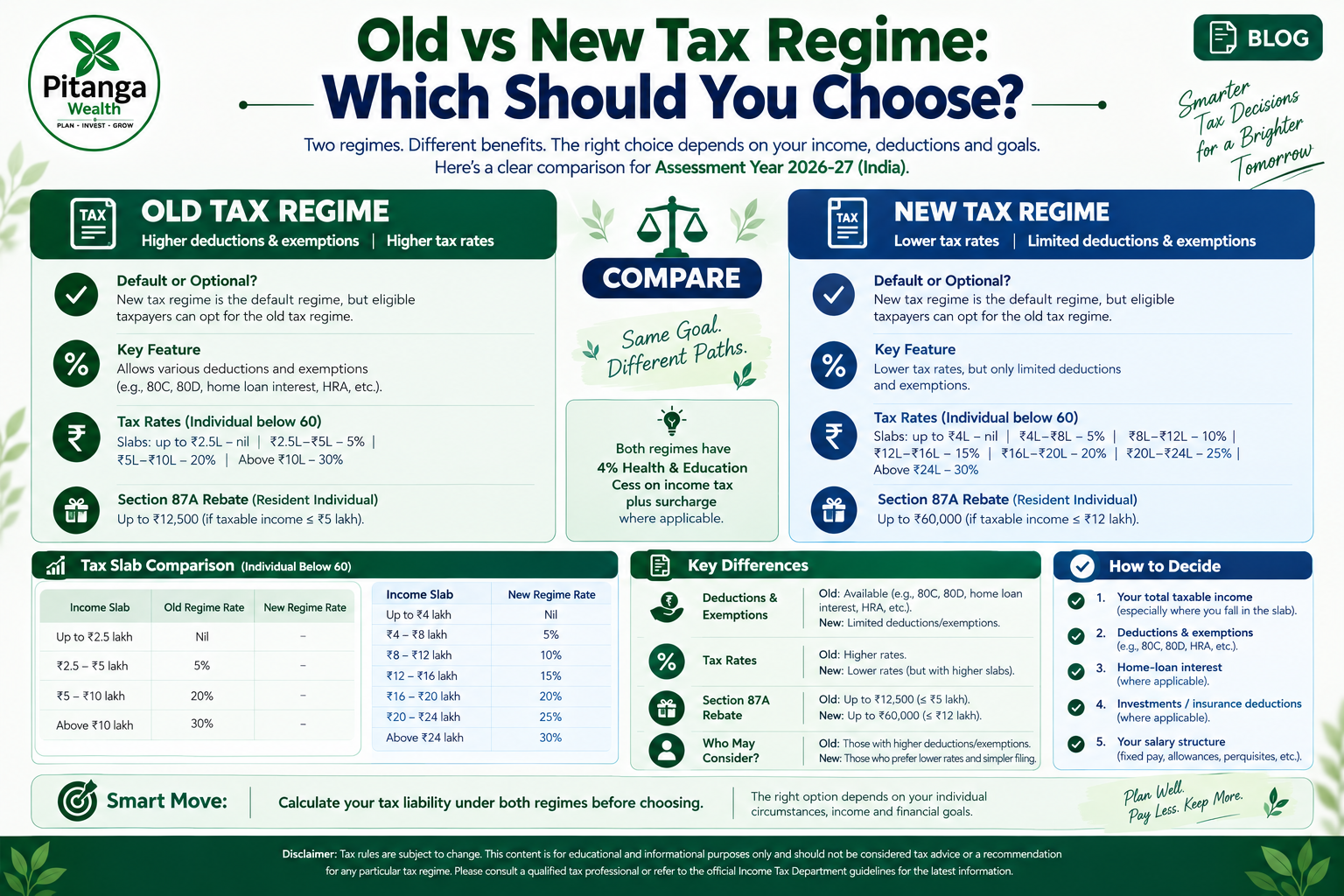
The old tax regime allows a range of deductions and exemptions — common ones include Section 80C investments, HRA (House Rent Allowance) if you’re renting, home loan interest, health insurance premiums under Section 80D, and the additional NPS deduction under Section 80CCD(1B), among others. The trade-off is that the slab structure historically applied somewhat higher rates at each income level compared to the new regime, with the deductions intended to bring your effective tax down below that headline rate.
The new tax regime is built around simplicity: generally lower slab rates applied to a broader base, but with most of the deductions and exemptions available under the old regime removed. It’s currently the default option for individual taxpayers, meaning you need to actively opt for the old regime if that’s what you want to use, rather than the other way around. Because exact slab rates, rebate thresholds, and deduction limits are revised periodically and are specific to each tax year, this article intentionally doesn’t quote exact figures — the Income Tax Department’s own online comparison tool, or a chartered accountant, will have the current numbers applicable to you.
Why So Many People Default Into the New Regime Without Deciding
Since the new regime is the default, a meaningful number of taxpayers end up in it simply through inaction rather than an actual comparison. This isn’t necessarily the wrong outcome — for some people, the new regime genuinely is better — but defaulting into something and choosing it after real comparison are two very different situations, and only one of them gives you confidence you’re not leaving money on the table.

Who Tends to Lean Toward the Old Regime
In the old vs new tax regime comparison, the old regime tends to work out better for people with a meaningful volume of qualifying deductions, which commonly includes:
- Those paying significant home loan interest, since this deduction can be substantial depending on the loan size
- Those paying rent in a city with high rental costs, where HRA exemption can be sizeable
- Those who invest heavily in 80C-eligible instruments (ELSS, PPF, life insurance premiums, and similar) up to the applicable limit
- Those contributing to NPS, which carries an additional deduction beyond the standard 80C limit
- Those with substantial health insurance premiums, particularly if covering parents as well as immediate family, which can qualify for a separate deduction
For these taxpayers, the combined value of deductions can meaningfully reduce taxable income under the old regime, sometimes enough to offset or exceed the benefit of the new regime’s lower headline rates.
Who Tends to Lean Toward the New Regime
On the other side of old vs new tax regime, the new regime tends to suit people whose financial situation doesn’t generate many qualifying deductions, including:
- Those who don’t pay rent or have a home loan (living with family, for instance, or already own their home outright)
- Those who prefer not to lock money into 80C-eligible instruments purely for a tax deduction, and would rather invest or spend based on other priorities
- Freelancers or those without HRA-eligible salary structures, who may not have access to some of the old regime’s bigger deduction categories
- Those who simply want a simpler filing process without tracking and documenting multiple deduction categories

How to Actually Compare, Rather Than Guess
The only reliable way to answer old vs new tax regime for your specific situation is to calculate your tax liability under both, using your actual income and actual deduction amounts for that year — not last year’s numbers, and not a friend’s situation. The Income Tax Department provides an official online calculator for exactly this comparison, and a chartered accountant can run the same comparison if your situation involves more complexity, such as business income or multiple income sources.
It’s worth doing this calculation freshly each year, not just once, since your deductions (a new home loan, a lapsed insurance policy, a change in rent) and the regimes’ own provisions can both change from one year to the next.
Can You Switch Between Regimes Every Year?
For salaried individuals without business income, switching between the old and new regime each year is generally permitted, which is exactly why an annual comparison makes sense rather than a one-time decision. For those with business or professional income, the rules around switching are more restrictive, and it’s worth understanding the specific provisions that apply to your situation before assuming you have the same yearly flexibility a salaried taxpayer does.
Common Mistakes People Make With This Decision
A few patterns show up repeatedly in how people approach old vs new tax regime.
Choosing based on what a friend or colleague picked, without running their own numbers. Two people with identical incomes but different deductions can have completely different answers to this comparison.
Assuming more deductions automatically means the old regime wins. It depends on the total value of those deductions relative to the rate difference between the regimes, not just the number of deduction categories involved.
Treating it as a one-time decision. A choice that made sense when you had no home loan or dependents can become the wrong choice entirely once those circumstances change, as happened in the story that opened this piece.
Not accounting for investments made purely to claim the old regime’s deductions. If 80C investments are made reluctantly just to reduce tax, and don’t otherwise fit your financial goals, it’s worth weighing whether the new regime’s simplicity, combined with investing that same money toward your actual goals, might serve you better overall.
Frequently Asked Questions
Is the new tax regime always better because the rates are lower? Not necessarily — a lower headline rate under the new regime can still result in higher tax than the old regime once genuine, substantial deductions are factored in. It depends entirely on your specific numbers.
Do I need to inform my employer which regime I’m choosing? Salaried individuals typically need to indicate their regime preference to their employer for TDS purposes at the start of the financial year, and can still make a different final choice when filing their return, within the rules applicable to that tax year. It’s worth checking current provisions with your employer’s payroll or HR team.
What if I don’t actively choose a regime? The new regime applies by default if no active choice is made, which is exactly why so many taxpayers end up in it without a deliberate comparison.
Can I claim 80C deductions under the new regime? Most 80C deductions are not available under the new regime, which is part of the structural trade-off between the two — fewer deductions in exchange for a simpler, generally lower-rate structure.
Should I choose a regime based on this year’s income only, or think longer term? It’s worth running the comparison annually based on that year’s actual numbers, since both your deductions and the regimes’ own provisions can change. A regime that suits you this year isn’t guaranteed to suit you in five years.
Is it worth consulting a CA just for this decision? For straightforward salaried situations, the official comparison calculator is often sufficient. For more complex income situations — business income, multiple properties, significant investments — a CA’s input can help ensure the comparison accounts for everything relevant to your specific case.
If you’re still weighing old vs new tax regime and want to work out which one fits your situation better — and how that interacts with your broader investment and insurance decisions — our team at Pitanga Wealth can help you think it through.
This article is for general educational purposes only and does not constitute tax advice. Tax slabs, rebate thresholds, deduction limits, and regime provisions are subject to change and are specific to each tax year; please refer to the Income Tax Department’s official resources or consult a qualified chartered accountant for figures and advice applicable to your situation. Pitanga Wealth is an AMFI-Registered Mutual Fund Distributor (ARN-134606); mutual fund investments are subject to market risks.
Written by the Pitanga Wealth team.
Follow us on Instagram: We break down tax and investing decisions like this one regularly — follow @pitangawealth for more.
This article is for educational and informational purposes only. It is not investment, tax, legal or insurance advice. Consider your circumstances and relevant documents before making a financial decision.