

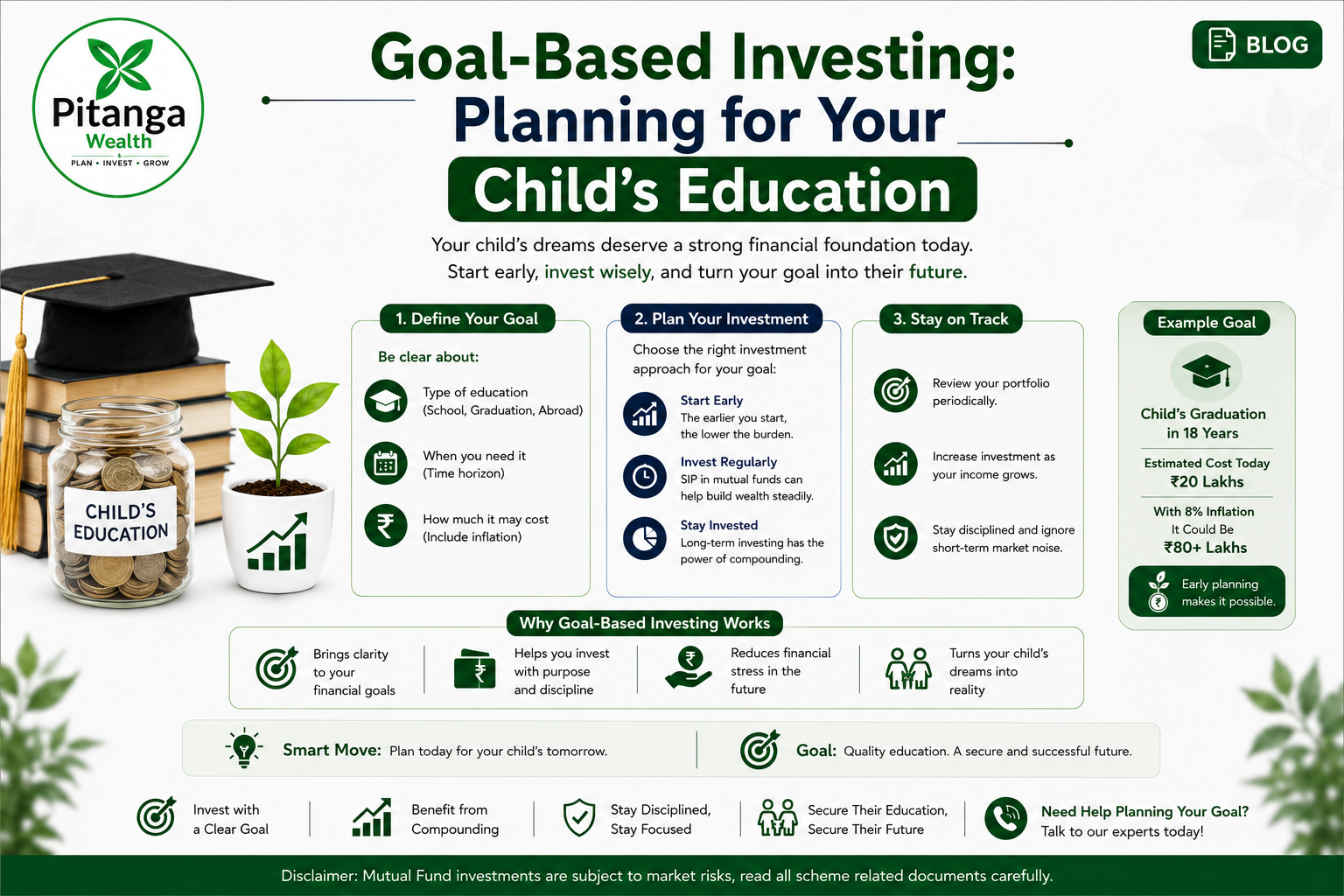
Goal-based investing for a child’s education sounds like a simple idea until you actually try it — most parents discover the gap between “saving regularly” and “saving enough” only when it’s too late to fully close it. A parent I know started a recurring deposit for her daughter’s education when the girl was born, adding a fixed amount every month for years, feeling responsible and on track. When her daughter turned fifteen and they actually priced out a professional course, the number was nearly triple what she’d budgeted for. The saving habit was there. The one thing missing was any real estimate of what the goal would actually cost by the time it arrived.
This is the exact gap that goal-based investing for a child’s education is meant to close. Rather than saving a comfortable amount and hoping it turns out to be enough, it’s a specific process: estimating the real future cost, working backward from your timeline, and choosing where to put your money accordingly.
What Makes This Different From Just “Saving for the Future”
Regular saving and goal-based investing sound similar but aren’t quite the same thing. Regular saving often starts with “how much can I set aside this month?” Goal-based investing for a child’s education starts with “what will this specific goal cost, by when, and what do I need to do now to get there?” The second question forces you to confront the actual target, which is uncomfortable but far more useful than a vague sense of “some savings is better than none.”
For a child’s education specifically, this distinction matters more than for most goals, for one simple reason: the deadline doesn’t move. Retirement can be pushed back a few years if needed. A home purchase can wait. A child turning 18 and needing college fees generally can’t be postponed because the investment corpus fell short.
Step 1: Estimate the Real Future Cost, Not Today’s Cost
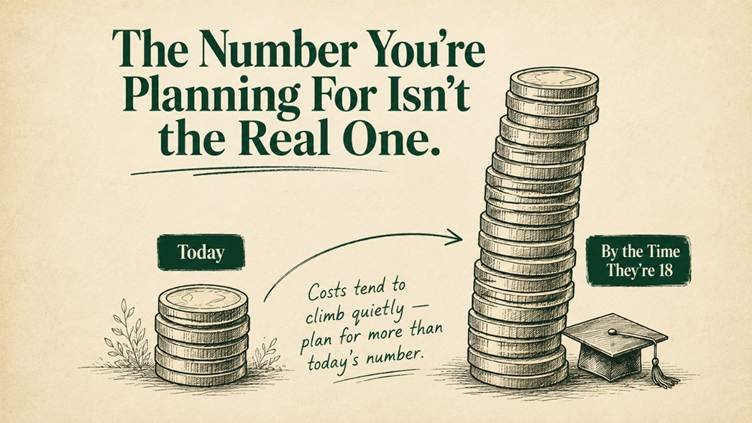
This is the step most people skip, and it’s the one that caused the gap in the story above. Education costs — particularly professional and higher education — have historically tended to rise faster than general consumer inflation in India, which means today’s fee structure is a poor guide to what the same course will cost in 10 or 15 years.
Rather than anchoring to today’s fees, it’s worth working with a deliberately higher assumed cost, and revisiting that estimate every few years as your child grows and your sense of the specific path (engineering, medicine, an overseas degree, and so on) becomes clearer. This is uncomfortable because the future number is always going to look larger than what feels intuitive today — but that discomfort is exactly the gap goal-based investing for a child’s education is meant to plan around, rather than ignore.
Step 2: Work Backward From the Timeline
Once you have a rough future cost in mind, the number of years until you need it changes almost everything else about the plan. A newborn gives you roughly 17–18 years before undergraduate costs hit, and possibly more before postgraduate costs. A ten-year-old gives you far less runway. This single variable — time available — is what determines how much you need to invest regularly and how much risk your plan can reasonably absorb.
The math here isn’t complicated in concept: a longer runway means smaller regular contributions can potentially reach the same target, purely because there’s more time for the invested amount to work. A shorter runway means either larger contributions are needed, or the target itself needs to be reconsidered.
Step 3: Match Your Asset Allocation to the Time Left, Not to What Feels Safe
This is where a lot of well-intentioned education planning goes wrong. It’s natural to want your child’s education money in something that feels safe — a fixed deposit, a recurring deposit, a savings account. But “feels safe” and “actually appropriate for a 15-year goal” aren’t the same thing.
For a long runway (young child, many years to the goal), a higher allocation to equity mutual funds is a common approach in goal-based investing, since equity is generally considered to have greater growth potential over long periods — though it comes with volatility and no guaranteed return, and its value can fall as well as rise over any given period. As the goal gets closer — say, the last 3–5 years before the funds are needed — many financial plans shift the allocation gradually toward debt instruments, to reduce the chance of a market downturn hitting right when the money is actually needed. This shift, often called a glide path, isn’t about avoiding equity altogether; it’s about reducing exposure to short-term volatility exactly when there’s no longer time to recover from it.
None of this is a guarantee of outcome — it’s simply the reasoning behind why time horizon, not comfort level alone, should drive how a long-term goal like education is invested.
Step 4: Automate It, and Actually Review It
A SIP set up specifically for this goal — rather than folding it into general savings — makes the plan easier to track and harder to accidentally under-fund. Many investors also use a step-up SIP, where the contribution amount increases automatically each year (often in line with expected income growth), which can help close the gap between what you can commit today and what a rising future cost will actually require.
Reviewing the plan periodically matters just as much as automating it. A plan set up when your child was two years old, based on assumptions from that year, may need real adjustment by the time they’re ten — updated cost estimates, a possibly clearer sense of their intended path, and a check on whether the current contribution is still on track.
Common Mistakes Parents Make With This Goal
Treating it as a general savings pot rather than a dedicated goal. Money without a specific label tends to get dipped into for other things, which is exactly what makes goal-based investing for a child’s education more effective than an undefined family savings fund — the specificity itself creates discipline.
Anchoring to today’s cost instead of a future, inflated estimate. This was the exact issue in the story that opened this piece, and it’s one of the most common and consequential planning mistakes.
Stopping the SIP during a market downturn. Pausing contributions exactly when markets fall means missing out on investing at potentially lower prices — a common behavioural mistake that goal-based investing, done with a clear long-term view, is meant to help investors avoid.
Using only fixed-income instruments for a goal that’s 15+ years away. This feels safe but can mean the invested amount grows more slowly than the rising cost of education itself, potentially widening the gap between what’s saved and what’s needed rather than closing it.
What About “Child Education Plans” Specifically Marketed for This?
Several insurers and fund houses market products explicitly labeled for child education goals, often bundling insurance and investment together. These aren’t inherently wrong, but it’s worth understanding what you’re buying: a combined insurance-and-investment product typically carries different costs, liquidity, and structure compared to investing through a straightforward mutual fund SIP earmarked for the same goal. Neither approach is universally “better” — the right choice depends on whether you specifically need the insurance component bundled in, or whether you already have adequate life cover separately and would prefer a simpler, more transparent investment vehicle for this particular goal. This is genuinely worth a conversation with an advisor rather than a decision made from a product’s marketing name alone.
Done properly, goal-based investing for a child’s education isn’t about predicting the future perfectly — it’s about giving yourself a real target to work toward instead of an optimistic guess.

Frequently Asked Questions
At what age should I start goal-based investing for my child’s education? Earlier is generally more effective, simply because a longer runway allows smaller regular contributions more time to work toward the goal. That said, starting later than ideal is still far better than not starting at all — the plan just needs to account for the shorter timeline with either higher contributions or a reassessed target.
How much education inflation should I actually assume? There’s no single universally correct figure, since costs vary significantly by course, institution, and whether the child pursues education abroad. Rather than fixating on one exact number, it’s more useful to revisit and update your estimate every few years as the picture becomes clearer, and to lean toward a more conservative (higher) assumption than an optimistic one.
Should I use a separate mutual fund for each child, or one combined fund? Either can work, but separate, clearly labeled investments for each child tend to make tracking progress toward each individual goal easier, especially if the children are different ages with different timelines.
What if I can’t estimate the exact course my child will pursue? That’s normal, especially for younger children. Working with a reasonable range and general cost benchmarks, then narrowing the estimate as your child gets older and their interests become clearer, is a practical approach — you don’t need certainty to start.
Is equity really appropriate for a goal as important as my child’s education? For a long runway, many financial plans do include equity exposure precisely because of its long-term growth potential, while shifting toward debt as the goal approaches to protect against short-term volatility. The “importance” of the goal is actually part of the argument for careful time-based allocation, not a reason to avoid equity altogether for a genuinely long horizon.
Can I adjust my goal-based investing plan if my child’s education path changes? Yes, and you likely will need to. A plan that assumed an engineering degree in India may need adjusting if your child later decides on an overseas postgraduate program instead — this is exactly why periodic review is part of the process, not a one-time setup.
If you’re trying to build a real plan for your child’s education — estimating the future cost, choosing the right investment mix, and staying on track as the timeline changes — our team at Pitanga Wealth can help you put a goal-based plan together.
Mutual Fund investments are subject to market risks. Read all scheme-related documents carefully before investing. The information in this article is for educational purposes only and should not be construed as investment advice or a recommendation to invest in any particular scheme or product. Pitanga Wealth is an AMFI-Registered Mutual Fund Distributor (ARN-134606).
Written by the Pitanga Wealth team.
Enjoyed this breakdown? We post explainers like this regularly on Instagram — follow @pitangawealth to catch them as they drop
This article is for educational and informational purposes only. It is not investment, tax, legal or insurance advice. Consider your circumstances and relevant documents before making a financial decision.